
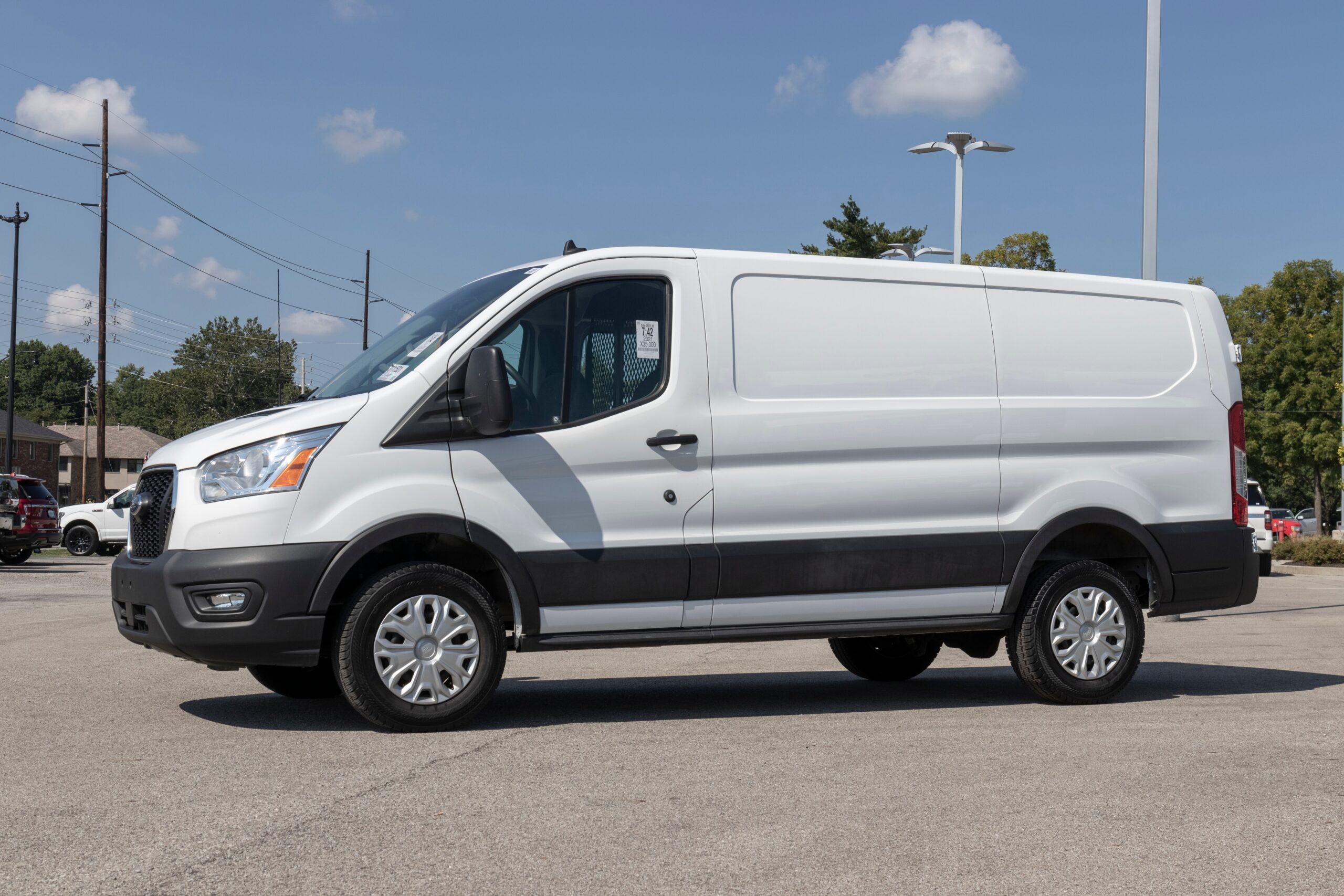
As the fourth quarter winds down across San Diego County, local business owners face a familiar set of year-end financial decisions. Between wrapping up job sites in Kearny Mesa, dispatching service routes down to Chula Vista, and reviewing profit-and-loss statements with your accountant, November and December bring a narrow window to reduce your taxable income before the calendar flips. For contractors, plumbers, HVAC technicians, delivery fleet operators, and self-employed tradespeople, investing in Section 179 used commercial vehicles San Diego dealers keep in stock is one of the smartest ways to turn an operational upgrade into a major tax advantage.
Instead of sending a larger check to the IRS, Section 179 of the Internal Revenue Code lets eligible businesses deduct the full purchase price of qualifying equipment, including pre-owned work vans and heavy-duty pickup trucks, during the tax year the asset enters service. At Miramar Car Center, we work with San Diego small business owners every fall who want to expand their fleet or replace an aging work rig before December 31 without absorbing steep new-vehicle depreciation.
Do used commercial vans and trucks qualify for Section 179?
Yes, pre-owned cargo vans and heavy-duty work trucks qualify for the Section 179 tax deduction as long as the vehicle is new to your business, purchased or financed, and placed into active service before December 31. To claim the write-off, you must also use the vehicle more than 50 percent of the time for qualified business operations.
Many first-time commercial buyers assume federal tax incentives apply only to brand-new vehicles. In reality, the IRS does not require a commercial vehicle to be brand new to qualify for Section 179 expensing. The vehicle simply needs to be “new to you” and acquired in an arm’s-length purchase from an unrelated party. Buying a low-mileage used cargo van or heavy-duty pickup lets your business avoid the sharpest initial depreciation hit while still writing off the qualifying purchase price on your current-year return.
One strict deadline catches late shoppers off guard every December. Signing a purchase order or placing a deposit before New Year’s Eve is not enough. Under IRS guidelines, the vehicle must be titled, delivered, and “placed in service” on or before December 31, meaning it is ready and available for its assigned business role before the year ends. If you plan to install ladder racks or interior shelving, shopping in November gives you breathing room to finish upfitting on time.
How do GVWR weight rules determine your Section 179 deduction?
When tax professionals evaluate vehicles over 6000 lbs GVWR list used trucks and commercial vans, the key specification is not curb weight or payload capacity. Instead, the IRS relies on the Gross Vehicle Weight Rating (GVWR) stamped onto the safety certification label inside the driver’s side door jamb. GVWR represents the maximum loaded weight of the vehicle, including its chassis, fuel, passengers, and cargo.
For the 2026 tax year, the overall Section 179 deduction limit across all qualifying business equipment reaches $2,560,000, with phase-outs starting only after a business spends more than $4,090,000 on capital purchases. However, passenger vehicles and lighter trucks face strict caps designed to prevent taxpayers from writing off luxury personal cars as business assets. Heavy commercial cargo vans and work trucks with a GVWR over 6,000 pounds bypass those passenger auto caps, and non-personal commercial configurations qualify for 100 percent first-year expensing.
“`html
| Vehicle Category | GVWR & Design Criteria | Representative Used Models | Section 179 Deduction Treatment (2026 Rules) |
|---|---|---|---|
| 100% Eligible Commercial Cargo Vans & Heavy Trucks | Over 6,000 lbs GVWR; enclosed cargo area with no seating behind the driver, or pickup bed at least 6 feet in interior length | Ram ProMaster 1500/2500/3500, Ford Transit 150/250/350, heavy-duty three-quarter-ton and one-ton pickups | Up to 100% of the business-use purchase price can be deducted in year one without the passenger SUV cap |
| Heavy SUVs & Short-Bed Crew Cab Pickups | Between 6,001 lbs and 14,000 lbs GVWR; passenger seating behind driver or pickup bed shorter than 6 feet | Half-ton short-bed crew cab pickups (5.5-ft bed), full-size body-on-frame SUVs | First-year Section 179 deduction is capped at $32,000, with remaining basis eligible for 100% bonus depreciation |
| Light-Duty Compact Vans & Passenger Vehicles | 6,000 lbs GVWR or less; standard passenger vehicles and compact city vans | Ram ProMaster City, Ford Transit Connect, standard midsize crossovers and sedans | Subject to annual IRS passenger automobile depreciation caps ($12,200 base limit, or up to $20,200 with bonus depreciation) |
Note: Federal and state tax codes contain specific rules regarding bonus depreciation, business-use proration, and California Franchise Tax Board conformity. Always verify exact deduction limits and vehicle eligibility with your CPA or tax advisor before finalizing your purchase.
How does California treat the Section 179 deduction for small businesses?
If you operate a business in San Diego, knowing the difference between your federal IRS return and your California Franchise Tax Board (FTB) filing prevents surprises in April. While federal rules allow businesses to write off up to $2,560,000 in qualifying equipment and combine that election with 100 percent federal bonus depreciation, California caps its state Section 179 deduction at $25,000 per year and does not allow federal bonus depreciation. Even with that state cap, securing a full federal write-off on Section 179 used commercial vehicles San Diego businesses purchase still delivers major cash-flow relief heading into Q1.
Which used commercial vans qualify for the Section 179 deduction in California?
For plumbers, electricians, HVAC installers, and couriers, searching for a Section 179 deduction used cargo vans California dealers carry usually leads straight to full-size commercial vans. Because these vans feature an enclosed cargo bay behind the front seats, no rear passenger seating, and a GVWR well above 6,000 pounds, the IRS classifies them as non-personal commercial vehicles exempt from the $32,000 heavy-SUV limit.
Why is the used Ram ProMaster a top pick for San Diego tradespeople?
Built with a front-wheel-drive layout, the Ram ProMaster eliminates the rear driveshaft tunnel, creating a low load floor that saves your knees when loading water heaters, compressors, or palletized freight. Its near-vertical side walls also make installing modular shelving straightforward. Every full-size Ram ProMaster 1500, 2500, and 3500 carries a GVWR between 8,550 pounds and 9,350 pounds, placing it comfortably above the 6,000-pound threshold for full Section 179 eligibility.
How does the used Ford Transit compare for fleet buyers?
If your routes involve heavy towing alongside interior cargo storage, a used Ford Transit brings rear-wheel-drive or all-wheel-drive capability to the table. Full-size Ford Transit 150, 250, and 350 cargo vans carry GVWR ratings from 8,670 pounds up to 11,000 pounds, offering multiple roof heights and wheelbases for urban alleys in North Park or highway runs up I-15.
What about compact vans like the Ram ProMaster City?
Smaller delivery businesses often look at the Ram ProMaster City for its nimble turning radius and lower fuel costs. With a GVWR around 5,395 pounds, it falls under the 6,000-pound cutoff and follows standard IRS passenger-vehicle depreciation caps rather than unlimited heavy-vehicle expensing. To compare payload dimensions and fuel economy across all sizes, read our guide on Choosing the Best Used Commercial Cargo Van for Your San Diego Small Business.
Which used heavy-duty pickup trucks qualify for a full Section 179 write-off?
When your daily workload requires pulling an equipment trailer or hauling materials across East County job sites, a heavy-duty pickup delivers serious muscle and tax efficiency. Any pickup truck with a GVWR over 6,000 pounds and an open cargo bed measuring at least six feet in interior length avoids the $32,000 heavy-SUV limitation completely. Three-quarter-ton and one-ton pickups clear 9,500 to 14,000 pounds GVWR with 6.5-foot to 8-foot beds, whereas Crew Cab half-ton trucks with 5.5-foot short beds fall under the $32,000 cap unless paired with 100 percent federal bonus depreciation.
Can you finance a used work van or truck and still claim Section 179?
One of the biggest advantages of pursuing a tax write off for work van small business CA purchase is that you do not have to pay cash to claim the full deduction. Whether you pay cash or finance through a commercial auto loan, you can deduct the full qualifying purchase price in the year you place the vehicle in service, even if you make only one or two monthly payments before December 31.
Self-employed contractors and LLC owners sometimes worry that irregular 1099 income will slow down approval near year-end. For tips on preparing bank statements and business records before visiting the lot, read our guide on Auto Financing for Freelancers: How to Buy a Used Car Without Pay Stubs. If you are exploring used Ram ProMaster commercial financing San Diego lenders offer, our finance team can structure terms tailored to your business cash flow.
What documentation should you keep to protect your Section 179 deduction?
Because the IRS classifies vehicles as “listed property,” keeping clear records from day one protects your write-off when filing IRS Form 4562:
- Bill of sale and financing agreement: Keep copies showing the purchase price, sales tax, registration fees, VIN, and purchase date.
- Door-jamb GVWR verification: Take a clear photo of the manufacturer’s certification label inside the driver’s door frame showing the GVWR over 6,000 pounds.
- Proof of placed-in-service date: Save work orders, commercial insurance binders, or service logs proving active business use on or before December 31.
- Mileage and business-use log: Track business trips versus any personal miles. If you use the vehicle 85 percent for business, your deduction is prorated to 85 percent of the purchase price.
Where can you find Section 179 eligible commercial vehicles in San Diego?
Waiting until the final week of December to shop for a work vehicle often leaves you with limited inventory while rushing against holiday bank closures and DMV deadlines. Shopping in November gives you first pick of clean, inspected commercial rigs and time to coordinate with your accountant.
At Miramar Car Center, we specialize in helping local contractors, delivery operators, and growing businesses find the right vehicle for the job. Our lot routinely stocks Section 179 used commercial vehicles that San Diego companies count on every day, including Ram ProMaster cargo vans, Ram ProMaster City models, Ford Transit vans, and heavy-duty work trucks. Browse our current lineup of commercial vans and heavy-duty trucks in San Diego online, or stop by our dealership on Miramar Road to inspect GVWR door labels in person and take a test drive before December 31.