Direct Answer: If you drive less than 30 to 40 miles a day, a standard 120V Level 1 wall outlet will likely keep your used EV charged overnight, since it adds roughly 3 to 5 miles of range per hour. If your commute is longer, your charging window is tight, or your EV has a larger battery pack, a 240V Level 2 setup (20 to 30 miles per hour) is usually worth the $500 to $1,500 installation cost.
So you just bought (or you’re thinking about buying) a used EV from a lot here in San Diego, and now you’re staring at your garage wall wondering if you need an electrician. It’s a fair question, and it’s one of the most common things buyers ask once the excitement of driving off in a used EV wears off and the reality of daily charging sets in.
The good news is that this decision comes down to math you can actually do yourself. Let’s break down Level 1 vs Level 2 EV charging at home for a used EV so you can figure out whether that outlet upgrade is worth it for your specific driving habits, or whether you’re fine plugging into the wall you already have.
So, what’s the Difference Between Level 1 and Level 2 Home Charging?
Level 1 charging uses the standard 120V household outlet, the same kind your washing machine or a lamp plugs into. Every EV comes with a Level 1 charging cord in the trunk, so technically you already own the equipment. It’s slow, adding somewhere between 3 and 5 miles of range per hour, but it’s also free to set up since you’re using an outlet that’s already there.
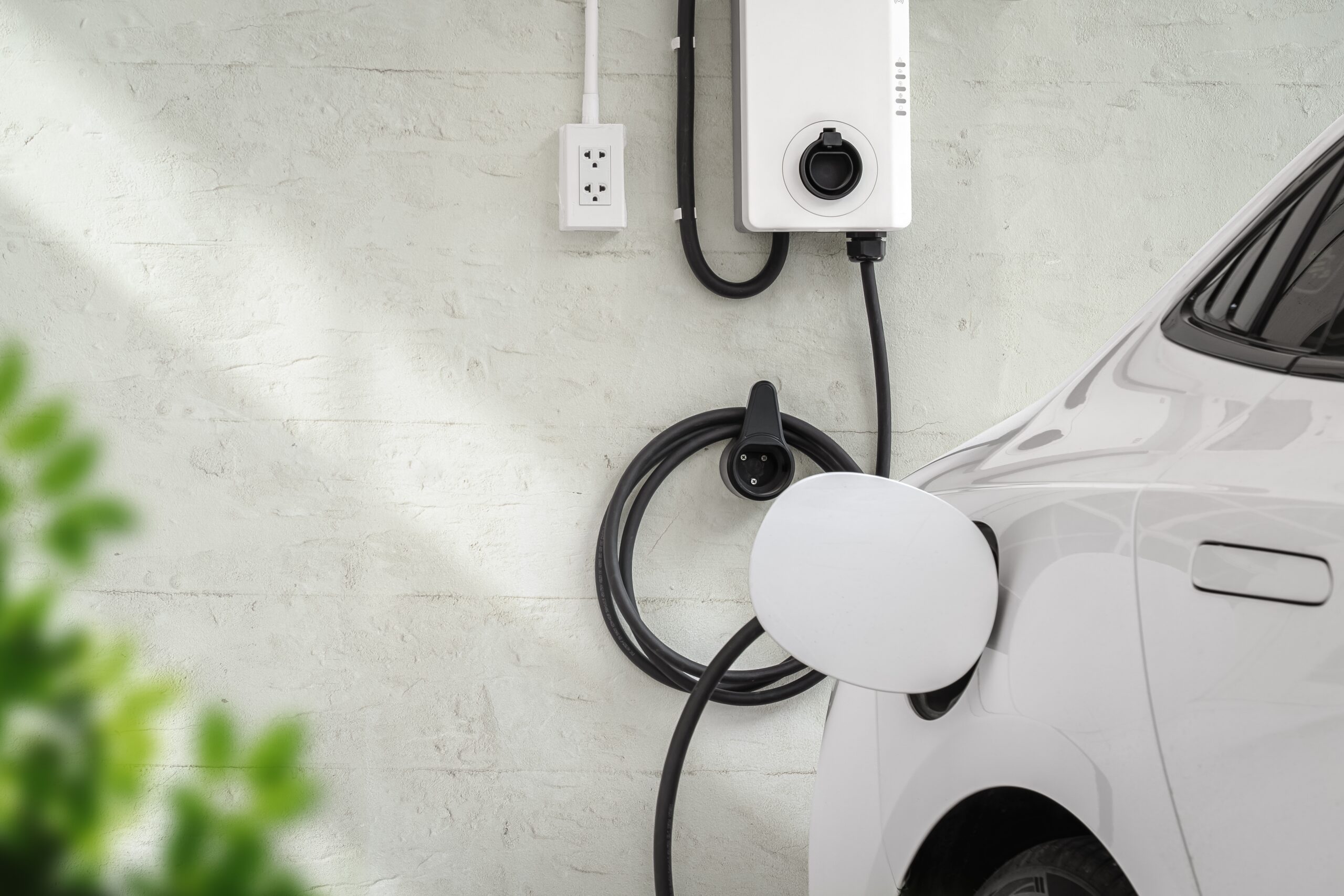
Level 2 charging runs on 240V, the same voltage as an electric dryer or oven. It requires either a dedicated charging station wired into your home’s electrical panel or, at minimum, a 240V outlet like a NEMA 14-50 that a portable Level 2 charger can plug into. Instead of single-digit miles per hour, you’re looking at 20 to 30 miles of range added for every hour it’s plugged in.
The gap between the two is huge on paper, but the real question isn’t which one charges faster. It’s which one actually fits how far you drive and how much time you have overnight to recover that range.
How Much Range Do You Actually Need Overnight?
This is where most buyers overthink it. Take your daily round trip commute and compare it against how many hours your car sits parked overnight.
If you drive 25 miles a day and you’re plugged in for 8 to 10 hours overnight, Level 1 charging adds somewhere between 24 and 50 miles in that window. That’s already more than enough to cover a 25 mile day with room to spare. For a lot of San Diego commuters going from neighborhoods like Clairemont or Mira Mesa into downtown or Sorrento Valley, that math works out fine on a basic outlet.
Once your daily driving climbs past 30 to 40 miles, or if you only have a short window to charge because of an odd work schedule, Level 1 starts cutting it close. That’s the point where a lot of owners start looking seriously at Level 2.
Is a Level 2 Home Charger Worth the Installation Cost?
For most used EV owners with longer commutes, yes. Here’s the reasoning.
A 240V Level 2 installation typically runs between $500 and $1,500, depending on how far your electrical panel is from where you park, whether your panel needs a capacity upgrade, and local electrician labor rates. San Diego permitting and labor costs tend to land in the middle to higher end of that range.
That’s a real expense, but weigh it against what you’re actually solving for: charging speed, flexibility, and peace of mind. With Level 2, a nearly depleted battery can go from empty to full overnight instead of taking two or three days on a standard outlet. If you ever need to charge fast before an unplanned trip, or you’re charging a second EV in the household, Level 2 removes the guesswork entirely.
When Does Level 1 Charging Make More Sense?
Level 1 is the better call when your daily mileage is modest and predictable. If you’re mostly running errands, doing a short commute, or your EV sits parked most days, there’s no reason to spend money you don’t need to spend. A lot of buyers assume they need Level 2 because that’s what dealerships and charging companies push, but plenty of daily drivers get by just fine on the cord that came in the trunk.
It’s also worth mentioning plug-in hybrids here. If you’re cross-shopping a used plug-in hybrid against a full battery electric vehicle, the calculation shifts. A plug-in hybrid typically has a much smaller battery, often good for 20 to 40 miles of electric range, so a Level 1 outlet can fully charge it overnight without much trouble at all. A full BEV with a 250 plus mile battery pack is a different story, especially if you’re regularly running that battery down close to empty.
What About Electricity Costs and Off-Peak Rates?
This is the part people forget to factor in. San Diego Gas & Electric offers time-of-use rate plans, and charging during off-peak hours (typically overnight) can meaningfully lower your cost per charge compared to charging during peak afternoon and evening hours. Level 2 charging makes it much easier to take full advantage of a short off-peak window since you can add a full battery’s worth of range in just a few hours instead of stretching a charge across an entire night or two.
If your daily charging habit naturally falls within an off-peak window regardless of charger type, the savings gap narrows. But if you’re someone who needs to top off quickly before an early morning rate change, Level 2 gives you a lot more control over when that charging actually happens.
How Do You Decide What’s Right for Your Situation?
Ask yourself three questions.
First, how many miles do you drive on an average day? Second, how many hours does your car actually sit plugged in overnight? Third, how big is the battery pack on the used EV you’re driving or considering?
If your daily mileage is under 30 to 40 miles, your overnight window is 8 hours or more, and you’re not dealing with a huge battery pack, Level 1 charging on a standard outlet will likely serve you fine, at least to start. You can always upgrade later if your driving habits change.
If any one of those factors tips the other way, longer commute, shorter charging window, or a bigger battery, the $500 to $1,500 spent on a 240V outlet or Level 2 charging station tends to pay for itself in convenience fairly quickly.
Should You Ask About Charging Setup Before Buying?
Yes, and it’s an easy question to bring up while you’re shopping. Ask what type of charging cord comes with the vehicle, what the battery size is, and what charging speed the onboard charger actually supports, since not every EV can accept the full output of a Level 2 charger anyway. Getting these details upfront means you’re not guessing about your home setup after you’ve already signed the paperwork.
If you’re weighing a used EV against a gas or hybrid alternative and want to talk through what charging actually looks like day to day, that’s a conversation worth having before you commit. Miramar Car Center works with San Diego drivers every day who are figuring out exactly this kind of decision, matching driving habits and home setups to the right vehicle instead of just the right price tag.
Browsing used cars for sale is usually where this conversation starts anyway. Once you know your daily mileage and your realistic overnight charging window, picking between Level 1 and Level 2 stops being a guessing game and turns into simple math you can run in your head.